
If you’ve never done a SWOT analysis before, you’re really in for a treat.
If done right, this simple process is a powerful tool in helping businesses and personal projects identify internal and external factors that affect their success. It is so helpful for making strategic decisions in every area of our lives.
The best reason to do this is that sometimes the outcome of the SWOT analysis tells us that it is a bad idea to proceed, which can save us thousands of dollars and years of wasted time.
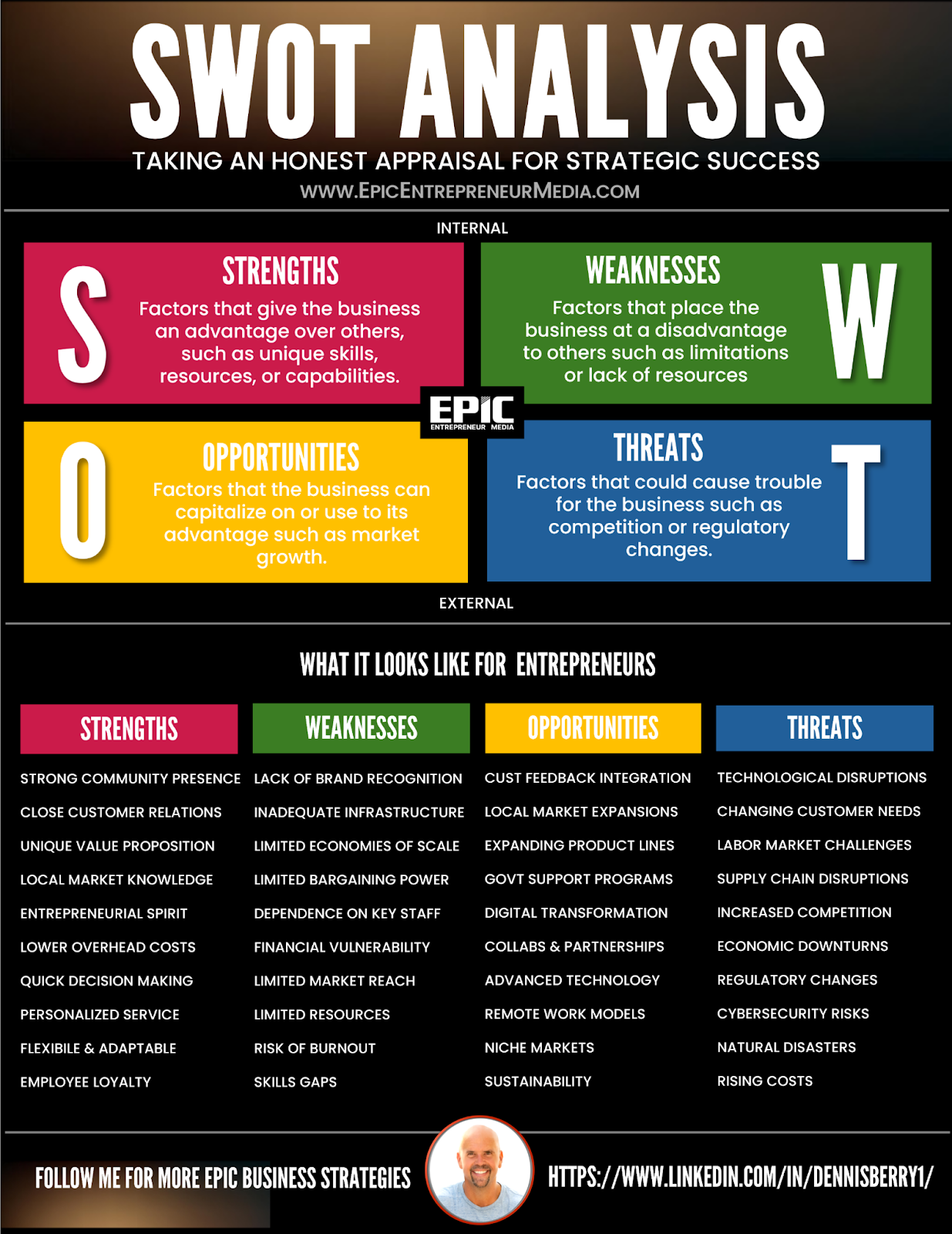
To begin with, SWOT stands for Strengths, Weaknesses, Opportunities, and Threats.
The infographic below demonstrates examples of each of these.
Please feel free to share this with your network.
Section 1: Components of SWOT Analysis
Strengths:
Definition: Internal attributes and resources that support a successful outcome.
Examples:
Strong brand reputation
Skilled and experienced workforce
Advanced technology
Efficient processes and systems
Questions to Identify Strengths:
What do we do well?
What unique resources can we draw on?
What do others see as our strengths?
Weaknesses:
Definition: Internal attributes and resources that work against a successful outcome.
Examples:
Outdated technology
Lack of necessary expertise
Poor location or inadequate facilities
Financial constraints
Questions to Identify Weaknesses:
What could we improve?
Where do we have fewer resources than others?
What are others likely to see as weaknesses?
Opportunities:
Definition: External factors that the organization could exploit to its advantage.
Examples:
Emerging markets
Technological advancements
Changes in government policy
Social trends
Questions to Identify Opportunities:
What good opportunities are open to us?
What trends could we take advantage of?
How can we turn our strengths into opportunities?
Threats:
Definition: External factors that could cause trouble for the business or project.
Examples:
Economic downturns
Increasing competition
Changing consumer preferences
Regulatory changes
Questions to Identify Threats:
What obstacles do we face?
What are our competitors doing?
Are there changes in technology or regulations that could impact us negatively?
Section 2: Conducting a SWOT Analysis
Preparation:
Assemble a Team: Include a diverse group of stakeholders to provide varied perspectives.
Gather Information: Collect relevant data on the organization’s internal and external environment.
Step-by-Step Guide:
Brainstorm and List:
Strengths: List all internal positive factors.
Weaknesses: List all internal negative factors.
Opportunities: List all external positive factors.
Threats: List all external negative factors.
Prioritize:
Rank each factor based on its impact on the organization.
Analyze:
SWOT Matrix: Create a matrix to visualize the relationships between strengths, weaknesses, opportunities, and threats.
Strategic Actions:
Leverage Strengths: Use strengths to take advantage of opportunities.
Address Weaknesses: Develop plans to improve or mitigate weaknesses.
Exploit Opportunities: Strategize on how to capitalize on opportunities.
Defend Against Threats: Formulate strategies to protect against potential threats.
Tools and Techniques:
Mention tools like SWOT Matrix templates, software (e.g., SWOT analysis tools like Creately, SmartDraw), and workshops to facilitate the process.
Discuss techniques such as PESTLE analysis (Political, Economic, Social, Technological, Legal, Environmental) to complement SWOT analysis.
Section 3: Implementing and Reviewing Strategies
Implementation:
Develop a detailed action plan based on the SWOT analysis findings.
Assign responsibilities and timelines for each strategic action.
Review and Adaptation:
Establish a review process to regularly assess the effectiveness of the strategies.
Adapt the strategies as needed based on ongoing evaluation and changing circumstances.

Here are some new AI tools that help small businesses:
1. Jasper
Jasper is an AI-powered content creation tool that helps small businesses generate high-quality marketing copy, blog posts, social media content, and more. It uses advanced natural language processing to create content tailored to specific audiences and goals.
2. Pandas
Pandas (not to be confused with the Python data analysis library) is an AI-based customer service platform designed to automate and enhance customer interactions. It can handle common inquiries, provide detailed analytics, and improve customer satisfaction by ensuring prompt and accurate responses.
3. Zoho Zia
Zoho Zia is an AI assistant integrated within Zoho's suite of business applications. It can help small businesses with tasks such as data analysis, sales predictions, email sentiment analysis, and workflow automation, making it easier to manage various aspects of the business efficiently.
4. Pymetrics
Pymetrics uses AI to improve hiring processes by matching candidates to jobs based on cognitive and emotional abilities. It leverages neuroscience-based assessments and machine learning to predict job performance and reduce biases in hiring, helping small businesses build more effective teams.
These tools offer various functionalities, from enhancing content creation and customer service to optimizing hiring and gaining insights from social media, making them valuable assets for small businesses looking to leverage AI technology.
Thought this was funny…
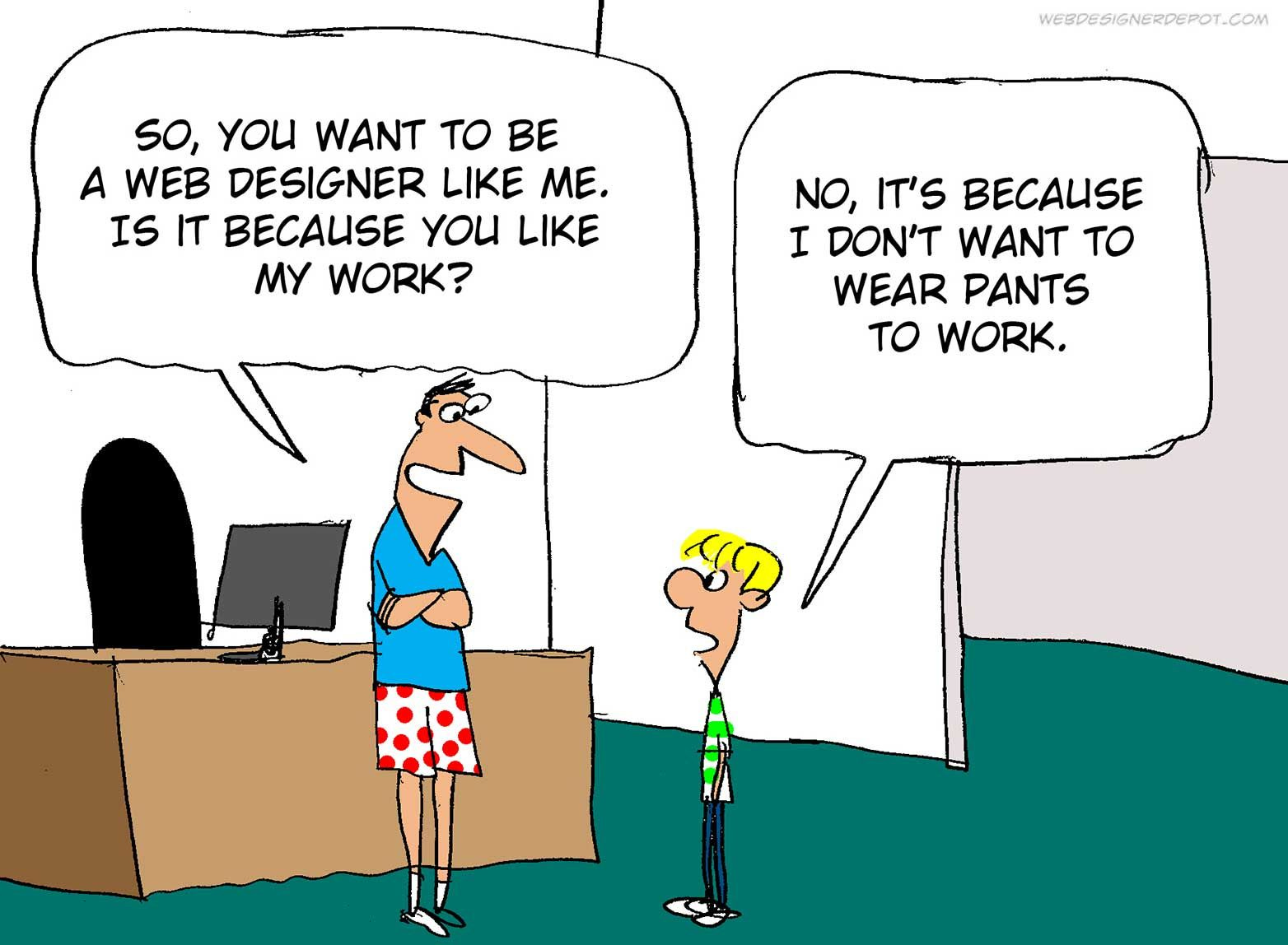
* Comic credit Webdesignerdepot.com
HubSpot: The Ultimate CRM

If you are not using a CRM (Customer Relationship Management), you’re leaving money on the table. It helps create new contacts, maintain relationships, creates workflows, email marketing, social media management… and so much more.
Basically, IT HELPS YOU MANAGE YOUR BUSINESS.
With so much already to do as entrepreneurs, having a CRM is like having your own personal assistant to manage the day to day tasks AND makes continued consistent outreach possible.
HubSpot stands out as a premier CRM platform, offering robust tools for marketing, sales, and customer service. Its user-friendly interface and comprehensive features make it an excellent choice for businesses looking to streamline their operations and enhance customer engagement.
Key features include:
Marketing Hub: Tools for email marketing, social media, and SEO.
Sales Hub: Pipeline management, email tracking, and meeting scheduling.
Service Hub: Customer support tools, ticketing, and feedback collection.
By integrating AI capabilities, HubSpot provides predictive lead scoring and advanced analytics, helping businesses make data-driven decisions. For more information and to sign up, use this direct link HERE.
Stay tuned for more updates in the next edition of the Epic Entrepreneur Newsletter.
Follow Dennis Berry on Linkedin
If you’re struggling to navigate growth in your business, there are a few ways I can help:
1. Epic Entrepreneurs Newsletter with 100,000+ subscribers (HERE)
2. 1-1 Business Coaching to (finally) monetize your businessHERE
3. Epic Biz Launch© - Launch your ENTIRE business in 1 week (HERE)
4. Join the Elite Leaders Network (HERE)